Attribute gaps
Finish, material, dimensions and installation type were incomplete — exactly the fields shoppers filter on in this category.

Reliable Remote Staffing
Since 2004
Client success story · CS18
Attribute completion, variation structure and content clarity on cabinet hardware
A US cabinet hardware brand selling knobs, pulls and handles had a strong portfolio and listings that were not built to use Wayfair's platform properly.
In a category where customers rely on dimensions, finish details and visual representation, content quality is the performance driver — and the gaps were showing up as visibility and engagement problems.
Problem
Product titles were inconsistent and attribute data incomplete, keyword alignment was weak, and descriptions were poorly structured.
Images were low-quality or missing, failing to show products in use, and improper variation setup limited customer navigation across sizes and finishes.
Finish, material, dimensions and installation type were incomplete — exactly the fields shoppers filter on in this category.
Products that belong together as sizes and finishes were not grouped, forcing customers to compare across separate listings.
Solution
Titles were rewritten to Wayfair's naming conventions, missing attributes completed — finish, material, dimensions, installation type — and product data standardised across all SKUs, improving indexing accuracy and appearance in relevant searches.
Structured, readable descriptions were developed highlighting durability, finish quality and usability, with dimension details organised for quick understanding so customers could decide faster and with more confidence.
Products were grouped into proper variation families by size, finish and style, and parent-child relationships corrected — significantly reducing friction in browsing and comparison.
High-resolution images with consistent styling were added, lifestyle images introduced to show real-world application, and dimension visuals created for clarity.
Relevant keywords were identified from customer search behaviour and integrated naturally into titles and descriptions, while product data was cleaned and validated across the catalogue with duplicates and inconsistencies removed.
Impact
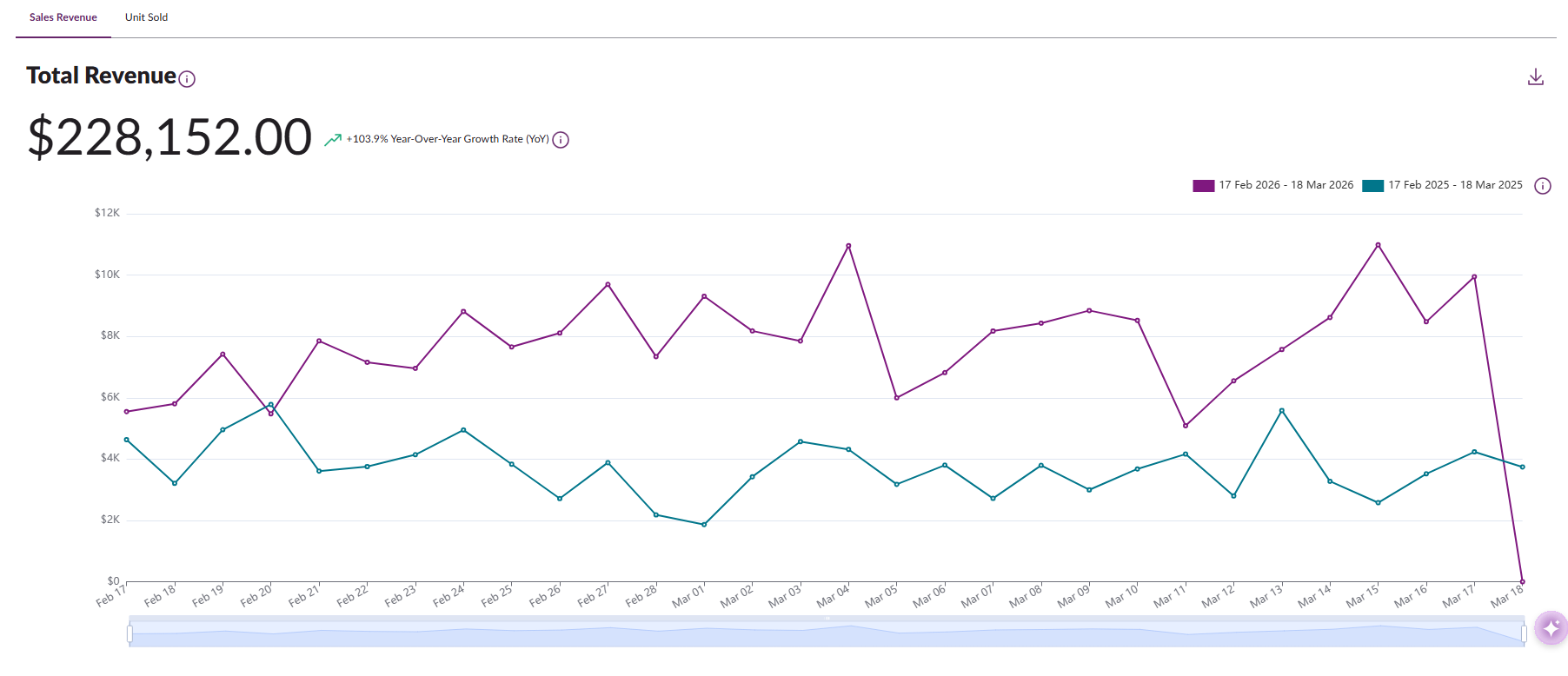
The products did not change. Completing the attribute data, fixing the variation families and making the content clear was enough to more than double revenue — which says how much performance was being left in incomplete listings.
Describe it in a sentence. We will tell you what we would do about it, and whether it is something we should be doing at all.
Tell us the workload
We will map the roles, the hours and the cost, and come back within one working day.
Or submit an enquiry — the full form, with a service line