

Amazon Vendor Central Shortage Claims: What Causes Shortages and How to Dispute Them
Updated 10 min read StaffCloud
Short answer: an Amazon shortage claim, also called a PQV (purchase quantity variance), is a deduction Amazon takes from your invoice payment when it can't match the units you invoiced to the units its fulfilment centres received. Most shortages come from supply chain, invoicing or catalogue defects, not lost stock. You dispute them in Vendor Central under Payments › Invoices › Review/dispute shortages. Do it within about 30 days of the invoice due date, with unit-level evidence such as ASNs and carton labels. Since 2025, disputes older than 24 months are rejected automatically.
For many Amazon vendors, shortage claims are the single biggest leak between what they invoice and what they get paid. They arrive quietly as deductions on remittances, they are easy to miss, and Amazon gives you a short window to challenge them. The good news is that a large share are caused by fixable data problems, and many invalid claims can be recovered with the right evidence. This guide explains what shortage claims are, what causes them, how to dispute them in Vendor Central, and how Amazon tightened the rules in 2025.
What is an Amazon shortage claim?
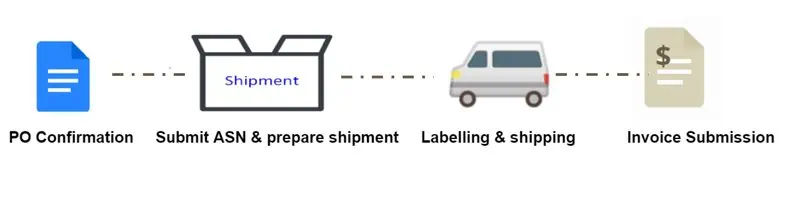
When you sell to Amazon as a vendor (1P), you ship against a purchase order (PO), send an advance shipment notification (ASN), and invoice Amazon for the units. Amazon then tries to match three things: what it ordered, what you invoiced and what its fulfilment centre (FC) actually received.
If Amazon can't find receipts for all the units on your invoice, it raises a shortage claim for the difference and deducts that amount from your payment. Amazon calls this a purchase quantity variance (PQV). The claim says, in effect, "we were invoiced for more units than we can show we received".
That doesn't mean the units never arrived. Very often they did, but a labelling, ASN, invoicing or catalogue error stopped Amazon's systems from matching them to your invoice.
Shortage claim vs price claim vs chargeback
Vendors often lump all deductions together, but Amazon treats them separately, and each has its own dispute route:
| Deduction | What it means | Typical cause |
| Shortage claim (PQV) | Fewer units matched as received than were invoiced | Unmatched receipts, ASN or label errors, carrier loss, unit-of-measure mismatches |
| Price claim (PPV) | The invoiced price doesn't match the agreed cost on the PO | Cost changes not agreed in Vendor Central, invoicing at an old or wrong price |
| Chargeback | A fee for not following Amazon's operational requirements | Late or inaccurate ASNs, prep and labelling non-compliance, PO on-time issues |
This guide covers shortage claims. Chargebacks are disputed separately, through the chargeback section of Vendor Central.
How a shortage claim is generated
- You invoice the PO, through Vendor Central, EDI or the API.
- Amazon reconciles the invoice against receipt data from the fulfilment centre. If some units are unmatched, its systems keep looking for receipts, for example from later deliveries of the same product.
- A shortage claim is raised for any units still unmatched. Vendor-side guides report this happens around five days before the invoice due date.
- The amount is deducted from the invoice payment and shows on the invoice in Vendor Central.
Because Amazon keeps looking for receipts after a claim is raised, some shortages fall as late receipts are booked. That is why many vendors review claims soon after they appear, but finish gathering evidence before filing, within the dispute window.
What causes shortages: the three defect types
Amazon groups the root causes of shortages into three types of defect. Most shortage claims trace back to one of them:
1. Supply chain defects
| Cause | What happens | Prevention |
| Failed, rejected or missing appointment | The truck missed its slot or was turned away, or no delivery appointment is linked to the PO | One booking per delivery, carrier on time, loads that meet Amazon's load and hazmat guidelines |
| No ASN, or an inaccurate ASN | The FC can't tie what arrived to your PO and invoice | Send an ASN for every shipment before it arrives, matching the PO, the invoice and the cartons |
| Wrong or missing carton labels | Cartons can't be scanned to the shipment, or units are scanned to the wrong product | Correct carton-level labels on every case, and no individual product barcodes on outer cartons |
| Late delivery | The shipment arrives well after it was invoiced, or after the delivery window closed | Ship within the delivery window, and cancel PO lines you won't ship rather than delivering late |
| Wrong fulfilment centre | Goods arrive at a different FC from the one on the PO | Check the ship-to location on every PO |
| Carrier loss or damage | Units are lost or damaged in transit, or delivered incomplete | Signed proof of delivery (POD) with carton counts, and carrier claims for losses |
2. Invoicing defects
| Cause | What happens | Prevention |
| ASINs or POs invoiced twice | Common when one PO ships in several deliveries | Reconcile the total invoiced quantity against the ordered quantity for split shipments |
| Cancelled items invoiced | Units are invoiced on a cancelled PO line, often after a missed delivery window | Check the PO for cancellations before invoicing |
| Products not on the PO | A newer version of the product was shipped instead of the one ordered | Invoice exactly the product ordered, with correctly mapped barcodes |
| Invoicing too early | The invoice is raised before the goods have shipped | Invoice once the shipment has been picked up, before it reaches the FC |
The Financial Scorecard in Vendor Central helps you spot and correct invoice problems before they turn into deductions.
3. Catalogue defects
| Cause | What happens | Prevention |
| Units vs case-pack mismatch | The catalogue says units but you ship and invoice cases (or the reverse), so quantities never reconcile | Keep case-pack quantity and case-pack barcode correct at ASIN and vendor level |
| One barcode linked to several ASINs | The product ID on the invoice points to two or more ASINs | Link each barcode to one ASIN. Use EAN/GTIN or ASIN rather than SKU on invoices |
| Unrecognised product ID | The ID on the invoice isn't in Amazon's catalogue, or has a typo | Use the same unit of measure and the same EAN on the PO, ASN and invoice |
Not every shortage is the vendor's fault. Units can be mis-scanned or mis-received at the fulfilment centre, and carriers lose and damage stock. That's why a documented dispute process matters even when your own operation is tight.
How to dispute a shortage claim in Vendor Central
Vendor Central offers two routes: from the invoice itself, or through Payments › Dispute Management › Create a new dispute. The invoice route is the most common:
- Go to Payments › Invoices. Invoices affected by shortages show a Review/dispute shortages option.
- Find the invoice and, from the Actions menu on the right, choose Dispute shortage by ASIN.
- Select the lines to dispute and, for each, enter the dispute quantity (the quantity you believe was delivered), the shipped product (ASIN, EAN or UPC) and the shipped date. Use the comments column for line-level details such as the ASN or carton label IDs.
- Add the dispute details: a clear title (include the invoice or PO number so your team can find it), a justification summary explaining why the claim is invalid, and your supporting documents.
- Review and submit. You normally get one chance to dispute each shortage through this process, so check that everything is complete and accurate before you submit.
Amazon has been updating the Vendor Central interface, so labels and menu positions may vary slightly between accounts. The fields Amazon asks for have stayed broadly the same.
Evidence that wins disputes
The strongest disputes prove that the specific units reached Amazon and should have been matched to the invoice:
- The ASN for the shipment, showing quantities by ASIN and carton
- Carton-level label data and images showing the cartons were labelled correctly
- EAN/UPC and case-pack details matching the PO and invoice
- Proof of delivery (POD) and bill of lading (BOL) from the carrier, signed, with carton or pallet counts
- The PO, invoice and any cancellation history, to show the invoiced units were ordered and not cancelled
Vendor-side guides note that Amazon increasingly favours unit-level receipt evidence, such as ASNs, EANs and carton label data, over a carrier POD alone. A POD proves a delivery happened, but not which units were in it. Keep all of these documents organised and searchable for every shipment, because you won't have time to hunt for them once the dispute clock is running.
Deadlines and the 2025 rule changes
Dispute within about 30 days of the invoice due date
Amazon doesn't publish a single headline deadline, but vendor data is consistent: disputes filed within roughly 30 days of the invoice due date succeed far more often than later ones. Disputes filed more than 40 days after the due date rarely succeed, even with good evidence. Older shortage claims also drop out of the "available actions" view on the Invoices page after about 30 days, though the invoices can still be found in the full list. Treat 30 days as your working deadline.
What changed in 2025
- A 24-month limit. Vendors can no longer file disputes or re-disputes for invoices older than two years, even though Vendor Central still shows older invoices. Quantity (PQV) and price (PPV) claims outside that window are rejected automatically. The change started in North America and has been reported spreading to other regions.
- No more bulk claims. Amazon reportedly stopped accepting bulk shortage claims that consolidated many line items into one case. Shortages now have to be disputed line by line, and re-filed claims should be linked to the original case.
Both changes were reported by vendor-recovery firms rather than in a public Amazon announcement. Check the current rules in Vendor Central or with your vendor manager. The practical effect is clear either way: shortage recovery now rewards checking deductions every week rather than auditing years of history once.
How to prevent shortage claims
- Make PO, ASN, invoice and cartons agree. Same products, same quantities, same unit of measure, same barcodes.
- Audit your Vendor Central catalogue. Check UPCs/GTINs, case-pack quantities and case-pack barcodes, especially after new item setup or pack changes.
- Use standard case packs and single-SKU pallets. Mixed cartons and pallets are a common source of mis-receipts.
- Label every carton correctly, and don't put individual product barcodes on outer cartons.
- Ship within the delivery window, to the FC on the PO, and cancel lines you won't fulfil.
- Prefer direct deliveries to the fulfilment centre where you can. Every extra hand-off is another chance for a scan to be missed.
- Invoice at the right time: after pickup, before arrival, and never for cancelled units.
- Track shortages by root cause. If the same defect keeps appearing, fix the process, not just the claim.
Frequently asked questions
What is a shortage claim on Amazon Vendor Central?
A deduction Amazon takes from an invoice payment when it can't match all the invoiced units to units received at its fulfilment centres. Amazon also calls it a purchase quantity variance (PQV).
How long do I have to dispute an Amazon shortage claim?
Aim to dispute within about 30 days of the invoice due date. Later disputes succeed much less often. Since 2025, disputes on invoices older than 24 months are rejected automatically.
What documents do I need to dispute a shortage?
The ASN, carton-level label data, EAN/UPC and case-pack details, the carrier's proof of delivery and bill of lading, and the PO and invoice. Unit-level receipt evidence is the most persuasive.
What is the difference between a PQV and a PPV claim?
A PQV (purchase quantity variance) is a shortage claim about units received. A PPV (purchase price variance) is a price claim, raised when the invoiced cost doesn't match the agreed cost on the PO.
Can I dispute a shortage claim more than once?
You normally get one chance to dispute each shortage through the standard process, so submit complete evidence the first time. Where a re-dispute is possible, it should be linked to the original case and must still fall within the 24-month limit.
Why do I get shortage claims when I shipped everything?
Usually because Amazon couldn't match the received units to your invoice. Common reasons are ASN or carton label errors, case-pack versus unit mismatches, barcodes linked to the wrong ASIN, or mis-receipts at the fulfilment centre.
How StaffCloud helps
Our team investigates each shortage claim before disputing it, manages and tracks disputes and escalated cases, keeps vendors updated with dispute status reports, and maintains a database of PODs so disputes can be raised on time. With a success rate of 80% in recouping shortages and a 90% success rate in resolving disputes, we help vendors recover disputed invoice payments, and we help them fix the catalogue and shipping documentation behind repeat claims. See our Vendor Central AP disputes and reimbursements service and our invoice dispute recovery case study, or contact us at support@staffcloud.net.
Related services
- eCommerce Order & Fulfillment Operations From purchase order to tracking number, across every channel you sell on. Explore service
- eCommerce Amazon Seller & Vendor Central Management Seller and Vendor Central run day to day — listings, content, ads, cases and claims. Explore service
- eCommerce Product Data & Catalog Management Attributes, matching, pricing compliance and catalogue syndication. Explore service
More articles in Amazon
-
 1 May 2024
How to Utilize Amazon Vendor Central's Financial Scorecard for Efficient Payments?
Amazon Vendor Central's Financial Scorecard tracks issues like shortages and missing invoices, ensuring timely payments.
-
 8 November 2026
Vendor Central “Permanently Unavailable” ASINs: What to Do When Orders Still Come Through
Why Amazon keeps sending purchase orders for ASINs marked permanently unavailable in Vendor Central, which rejection rea
-
 31 May 2024
How to submit an invoice on Amazon EU Vendor Central?
Creating an invoice on Amazon Vendor Central is an important process for vendors to receive payment for the products sup