Inconsistent product data inputs
Product information arrived in multiple formats with inconsistent naming and missing fields, so every upload needed rework before it could be standardised.

Reliable Remote Staffing
Since 2004
Client success story · CS31
Enabling accurate and scalable product launches on Amazon
The client needed support launching new products in Amazon Seller Central, with every product created accurately, compliant with Amazon catalogue standards and ready for marketplace visibility. The product range was strong; the internal process for creating listings was not — it was inconsistent, which produced delays, errors and suppressed listings.
The objective was a structured New Item Setup framework that would standardise how products are created, reduce catalogue errors and make launches faster and more predictable — a repeatable process rather than a person.
Problem
Successful new item setup depends on complete, accurate product data: identifiers, brand attribution, structured listing content, correct category classification, full attributes, compliant imagery, pricing and packaging detail, any category compliance documentation, and correctly configured variation relationships. Gaps in any of those surface later as errors.
Product information arrived in multiple formats with inconsistent naming and missing fields, so every upload needed rework before it could be standardised.
Listings lacked category-specific attributes or carried wrong values, causing failed uploads, poor classification and weak indexing in Amazon search.
Incomplete data, missing images and non-compliant content suppressed listings and pushed go-live dates back.
Incorrect parent-child relationships broke variation families and duplicated listings, making the range hard to navigate.
With no structured workflow, listing creation and error correction meant repeated manual intervention.
Formatting problems and invalid values caused repeated upload cycles before product data would process.
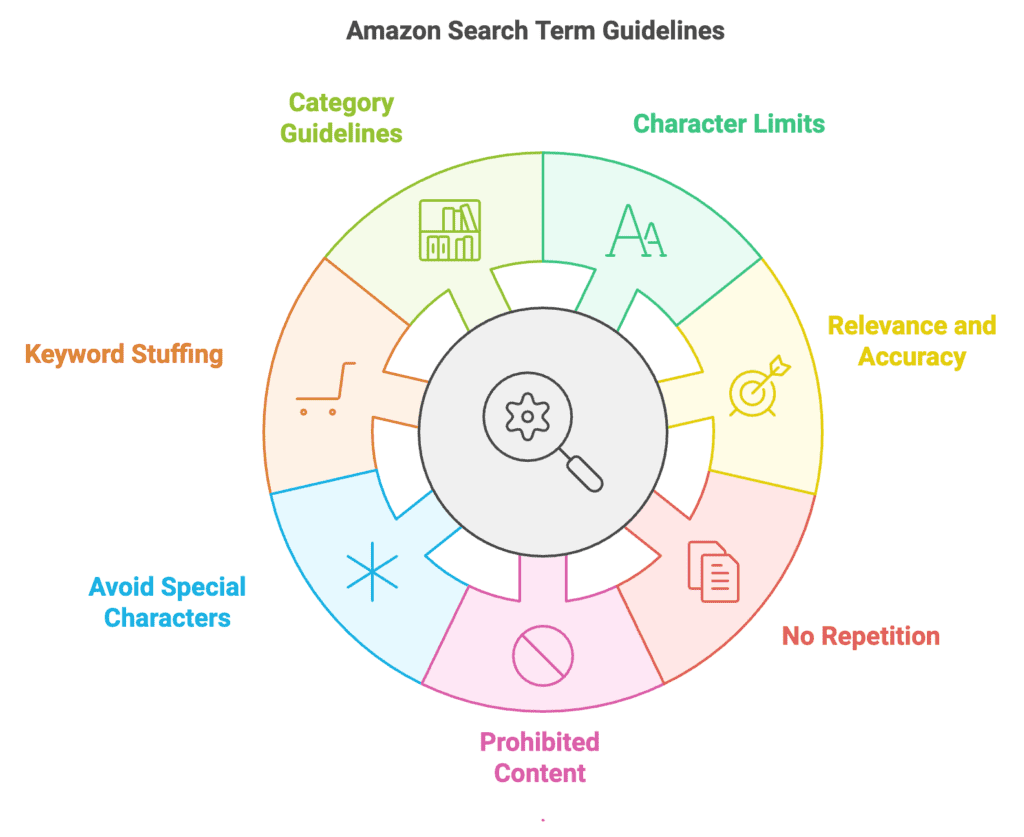
Products landed in irrelevant categories, damaging discoverability and keyword indexing.
Even once live, listings underperformed because of poor indexing, incomplete backend data and keywords that did not match how customers search.
Solution
A centralised data template was created to standardise every product input, so identifiers, attributes and specifications arrive in one consistent format aligned to Amazon's catalogue requirements.
Each product was validated against its category's requirements before submission, so mandatory attributes were complete — which is what removes upload errors, rejections and post-launch corrections.
Products were mapped to the most relevant Amazon categories through detailed classification checks, for accurate indexing and alignment with real search intent.
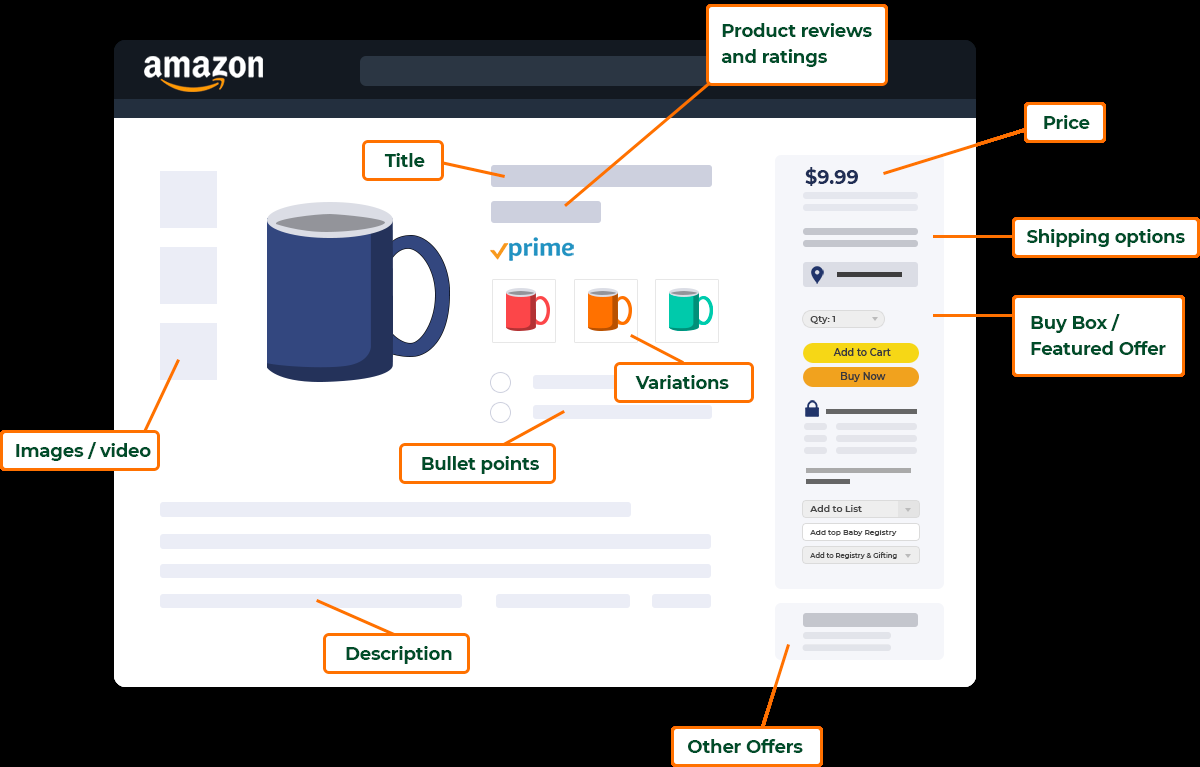
Titles, bullets and descriptions were built on a structured framework: readable, feature-led and within Amazon's content standards.
Parent-child relationships were configured deliberately so variations group correctly and customers can move across size, colour or format options.
Listings were created through flat files with systematic error identification and resolution, so uploads complete rather than half-complete.
Impact
A structured New Item Setup process turns product launches from an individual effort into an operating procedure. The catalogue stays stable as it grows, and the time between a product being ready and a product being live stops depending on who happens to be available.
Describe it in a sentence. We will tell you what we would do about it, and whether it is something we should be doing at all.
Tell us the workload
We will map the roles, the hours and the cost, and come back within one working day.
Or submit an enquiry — the full form, with a service line